What You'll Learn
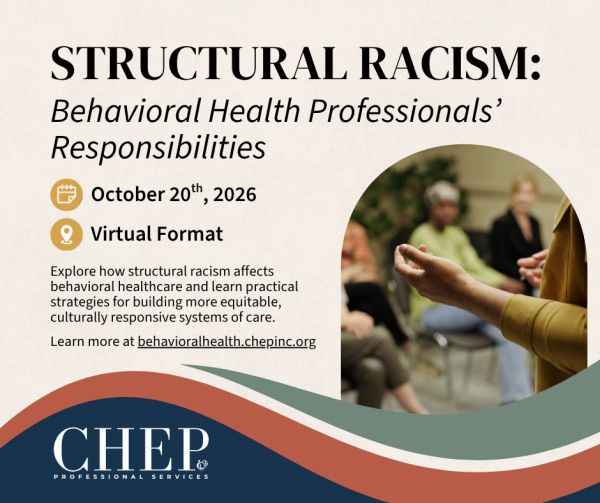
Who Should Attend?
This training is designed for social workers, psychologists, professional counselors, addiction professionals, clinical supervisors, behavioral-health administrators, and other healthcare and human-services professionals.

Topics Include
- Racial and ethnic disparities in behavioral healthcare
- Maryland’s structural racism training requirement
- Cultural humility and linguistic competency
- The Cultural Competence Continuum
- Bias in policies, assessments, data, and crisis-response systems
- Bias audits and health equity impact assessments
- Workforce representation and organizational accountability
Presented by CHEP Professional Services
- Explain structural racism as defined by Maryland law and behavioral-health practice standards.
- Examine its effects on people served by behavioral-health systems.
- Evaluate organizational practices using a cultural competency framework.
- Identify strategies for addressing and preventing structural racism in behavioral healthcare.
Presented By